Get Free Consultation!
We are ready to answer right now! Sign up for a free consultation.
I consent to the processing of personal data and agree with the user agreement and privacy policy
We are ready to answer right now! Sign up for a free consultation.
I consent to the processing of personal data and agree with the user agreement and privacy policy
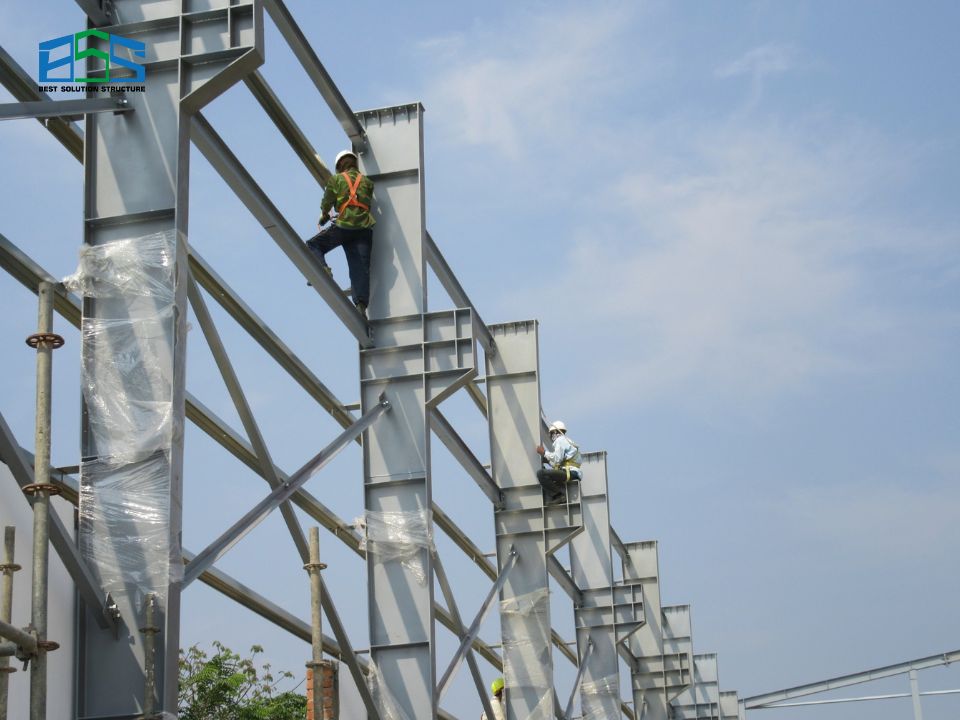
Steel structures play a vital role in modern construction due to their strength, durability, flexibility, and efficiency. With continuous advancements in engineering and manufacturing technology, steel has become one of the most widely used materials in industrial, commercial, and infrastructure projects worldwide.
A steel structure is a building system in which the primary load-bearing components—such as columns, beams, trusses, and frames—are made of structural steel. These components work together to safely transfer loads from the building to its foundations.
Steel structures are known for several outstanding characteristics that distinguish them from traditional construction materials:

The use of steel structures offers numerous advantages in construction projects:
Steel components are fabricated off-site and assembled on-site, significantly reducing construction time compared to conventional methods.
Shorter project timelines, reduced labor requirements, and optimized material usage contribute to overall cost savings.
Factory fabrication allows strict quality control, ensuring consistent dimensions, welding quality, and structural performance.
Steel structures are designed to withstand heavy loads, wind forces, and seismic activity when engineered according to standards.
Steel is recyclable and reusable, reducing construction waste and environmental impact.


Compared to traditional reinforced concrete structures, steel structures offer:
Faster installation and reduced on-site work
Higher precision and consistency
Greater flexibility for future modifications
Reduced overall structural weight
While initial material costs may vary, the long-term benefits of steel structures often result in lower lifecycle costs.
Steel structures represent a modern, efficient, and reliable solution for today’s construction industry. Their combination of strength, speed, adaptability, and sustainability makes them an essential choice for a wide range of construction applications.
As construction demands continue to evolve, steel structures will remain a key driver in delivering high-quality, cost-effective, and future-ready buildings.