
Get Free Consultation!
We are ready to answer right now! Sign up for a free consultation.
I consent to the processing of personal data and agree with the user agreement and privacy policy

We are ready to answer right now! Sign up for a free consultation.
I consent to the processing of personal data and agree with the user agreement and privacy policy
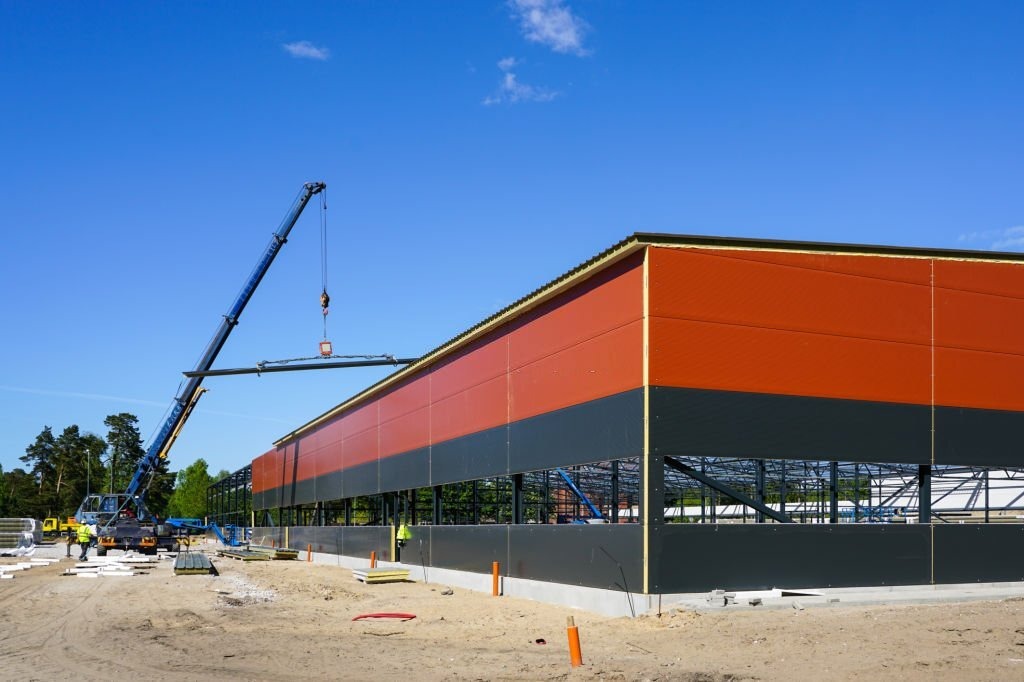
Steel is widely recognized as the backbone of modern industrial construction due to its strength, durability, and speed. However, once you have decided to build with steel, you face a critical choice: Should you opt for a Pre-engineered Building (PEB) system or stick with Conventional Steel structures?
Many investors assume “steel is steel,” but these two methods differ significantly in design philosophy, fabrication, and erection processes. Making the right choice can save you substantial time and money. This article breaks down the key differences to help you make an informed decision.
Before comparing, let’s define the contenders:
Conventional Steel Structures: These are built using standard hot-rolled steel sections (like standard I-beams, H-beams, channels) available in the market. The structural members have a uniform depth throughout their length. They are often heavily relied on site welding and cutting.
Pre-engineered Buildings (PEB): PEBs use built-up sections that are tapered (the depth changes along the length). These members are custom-engineered to match the specific stress loads at every point of the frame, optimizing material usage. The entire kit is fabricated in the factory and bolted together on-site.

Here is how they stack up across critical project metrics:
A. Design Efficiency and Weight
PEB: Because PEB uses tapered sections, steel is only placed where it is needed most (high-stress areas). This results in a significantly lighter structure—often 20-30% lighter than conventional steel for typical warehouses.
Conventional: Using uniform sections means steel is often wasted in areas with low stress. The structure is heavier and “over-designed” in many places.
B. Speed of Construction
PEB: Speed is PEB’s biggest advantage. All components are pre-cut, pre-drilled, and pre-painted in the factory. Site work is primarily just bolted assembly (erection), which is incredibly fast.
Conventional: Requires extensive on-site labor, including cutting, welding, and modifications. This process is slower and more dependent on weather conditions and welder skill.
C. Cost Implications
PEB: For standard wide-span buildings (like factories, warehouses), PEB is usually more cost-effective due to reduced steel weight and faster erection times.
Conventional: Often higher cost for standard projects due to heavier material weight and higher on-site labor costs.

The choice depends entirely on your project’s nature.
Choose PEB if:
You are building warehouses, factories, hangars, or showrooms.
You require large, clear spans (column-free spaces).
Speed of delivery and budget optimization are top priorities.
Choose Conventional Steel if:
You are building high-rise structures or complex architectural shapes.
The structure needs to support extremely heavy dynamic loads (e.g., heavy overhead cranes, massive industrial machinery).
You need to make frequent on-site modifications during construction.

Both PEB and conventional steel have their place in modern construction. PEB is the undisputed champion of efficiency for standard industrial buildings, while conventional steel remains essential for complex, heavy-duty applications.
Not sure which method suits your specific requirements? Our engineering team is ready to analyze your project and recommend the most optimal solution.
